I was born in the wrong generation and I don't really like much modern music. I'm really stuck as to what song I should use for my music video. I'm also worrying about the image I am going to protect through my music video. For now, here is some of the modern music I do like:
The Birthday Massacre - a band I stumbled across in 2006 (my gothy stage obviously) via socialnetworking. This was the first song I heard by them: Blue. I really liked their sound. I had honestly never heard anything like it. I grew up listening to the likes of Bruce Springsteen and Elvis Costello. No-one I knew had ever heard of them, I loved it. I had always listened to my father's music and for the first time in my life I felt like I had my own sense of individuality as everyone thought I was crazy for liking them! It sounds really cheesy, but this is the reason I still listen to them.
I fell in love with frontwoman Chibi, when I went to see them at Islington in 2007. Their image can certainly be stereotyped I guess. I want to create an image that challenges stereotypes, something different. I don't quite know how I'm going to do this.
The videos they produce are quite different, this is what I like about them.
They are an amazing band, in 2002, they independently released a limited edition CD entitled Nothing and Nowhere. In July, 2004, they released a nin song EP entitled Violet and at the end of the year, re-released Nothing and Nowhere with new sleeve artwork. In the fall of 2004, the band was signed to Repo Records in Germany, and released a remastered version of Violet in Europe.
In 2005 the band signed to Metropolis Records and released Violet in the U.S.A., Canada, the UK and most of South America. In August, the band began a series of international tours taking them to Switzerland, Germany, the Netherlands, Hungary, the Czech Republic and Belgium.
Also in August, a DVD consisting of a video for the song Blue was released. (Which I have) It also includes behind-the-scenes footage, interviews, a studio performance of Nevermind as well as live performances of Violet and Video Kid. The centerpiece of the DVD was of course the Dan Ouellette- directed video for Blue.
In June 2007, the band began working on a new record with Canadian producer/engineer Dave "Rave" Ogilvie. The demo version of the song Kill the Lights (Walking with Strangers) was released on Vampire Freaks (http://vampirefreaks.com/u/thebirthdaymassacre) and MySpace (http://www.myspace.com/thebirthdaymassacre) in January 2007. Looking Glass (another single from the same album) was released on the social networking sites in August.
is one of the best music videos of all time. don't try and argue with me :)
in all seriousness though, one of Dylan's first electric pieces - it was also notable for its film clip which first appeared in D.A. Pennebaker's documentary, Don't Look Back.
What's amazing about it, is the number of political digs the song features and the amount of artists it influenced.
The line's in the first verse are a reference to the production of LSD and the politics of the era. The song also depicts some of the growing conflicts between 40-hour workers and the emerging 1960s counterculture. The widespread of drugs, and turmoil surrounding the Vietnam War, etc. The song also throws up a number of references to the struggles created by the American civil movement. "Bctter stay away from those/ that carry around a fire hose".
The song has been covered many times, in a range of styles. Gregory Isaacs has covered it, Tim O'Brien, The Red Hot Chili Peppers too. Elvis Costello's, Pump It Up was inspired by this song also.
Incase you haven't learnt by now, Bob Dylan is my favouritest person EVER I'm not sure if I want to use one of his songs though,
As I looked at David Bowie in previous posts, I decided to look at Columbia Records as he signed to them.
This record label is amazing really: Columbia is the oldest surviving brand name in pre-recorded sound (founded in 1888). It went on to release records by plently of notable singers, instrumentalists and groups. From 1961 to 1990, it's recordings were released outside the U.S. and Canada on the CBS Records label before adopting the Columbia name in most of the world. Today it is a premier subsidiary label of Sony Music Entertainment. Steve Barnett and Rick Rubin are the co-heads of Columbia Records.
It features artists I like signed to the label such as: David Bowie, Patti Smith, Bruce Springsteen & Bob Dylan. It also features a catalogue of new artists such as: Calvin Harris, Beyoncé and MGMT.
What's nice about the label is the fact they still have their 'golden oldies' as the majority of them are still creating records: - Bruce Springsteen latest release being 'Working on a Dream', his 16th studio album which was released at the beginning of this year.
http://www.youtube.com/watch?v=XtS78vUUzJo
- Patti Smith latest release being 'Twelve', a cover album which came out in 2007.
Patti Smith's cover of Nirvana's 'Smells like Teen Spirit'. The album also includes covers of The Doors, Bob Dylan, REM and The Beatles.
albums; Johnny Cash: The Fabulous Johnny CashAfter making a name for himself on Sun Records, towards the end of his three-year contract Cash started saving his better new material. The results appeared on Fabulous, his Columbia debut, with five great Cash songs including “Frankie’s Man, Johnny,” “I Still Miss Someone,” “Don’t Take Your Guns to Town,” and “Pickin’ Time,” and mostly well-chosen covers. Among the latter are Dorothy Love Coates’s gospel favorite “That’s Enough,” proving that producer Don Law’s promise that Cash would have more freedom regarding his musical direction than Sun’s Sam Phillips had allowed. Aside from the Jordonaires’ syrupy backing vocals, Law kept the arrangements surprisingly stripped down for a major-label country album, only adding subtle drumming to Cash’s group The Tennessee Two (guitarist Luther Perkins and bassist Marshall Grant) and, very occasionally, light touches of steel guitar and piano. As a result, this record largely sounds timeless.
Bob Dylan: The Freewheelin' Bob DylanDylan’s second album opened eyes because it unleashed his superb songwriting on the world with eleven brilliant, stylistically varied originals. For the socially conscious, it offered anti-war and pro-civil rights masterpieces: the acerbic “Masters of War” (arguably the most pointed anti-war song ever), the more philosophical “Blowin’ in the Wind,” the chilling “Oxford Town” (a then-topical look at an incident of racist violence in the Mississippi town of that name), and the poetic, dread-filled “A Hard Rain’s A-Gonna Fall.” Dylan’s off-the-cuff humor was on display in “Bob Dylan’s Blues,” the post-apocalytic “Bob Dylan’s Dream,” and “I Shall Be Free.” Even more biting wit comes in the kiss-off “Don’t Think Twice, It’s All Right.” “Down the Highway” offered Dylan’s take on raw blues. One of Dylan’s three best albums, this doesn’t have a weak track on it.
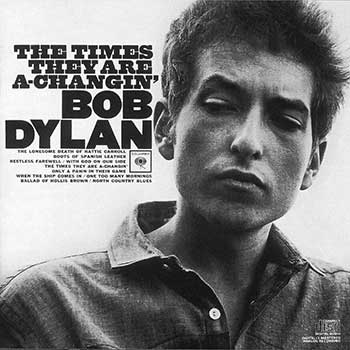
Bob Dylan: The Times They Are A-Changin'After the humor of the previous year's LP, this was a slap in the face, or a wake-up call: cold fury aimed at injustice and war. For all that, though, the raw, desolate sound of the album was more intimate lament than protest-song sing-along. Sam Cooke, among others, greatly admired the clarion call of the title track.
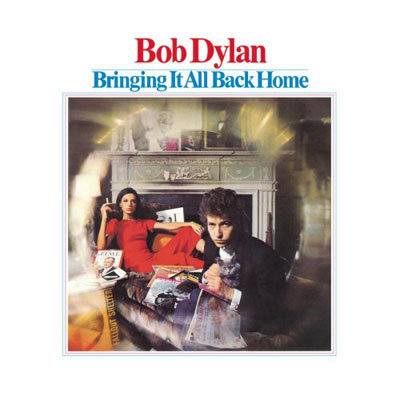
The Byrds: Mr. Tambourine Man and Turn! Turn! Turn! The Byrds gave an American answer to the challenge of the Beatles with these two LPs, proving co-leader Gene Clark ("I'll Feel a Whole Lot Better," "Here Without You," She Don't Care About Time") a fine songwriter. But it was their #1 hit covers of Dylan (title track of the first album) and Pete Seeger (second album title track) that made the biggest waves, birthed folk-rock, and helped bring Dylan (five songs on the two albums) into the mainstream. Bob Dylan: Bringing It All Back Home This has a split personality: on side one, Dylan was controversially backed by a rock band, while side two returns to acoustic folk. Yet the songwriting was basically the same, and Dylan’s increasingly surreal lyrics were approaching new heights of inspiration. “Subterranean Homesick Blues,” was Dylan’s first Top 40 song, if barely (for one week at #39); its many memorable phrases (most famously, “You don’t need a weather man / To know which way the wind blows” and “Don’t follow leaders / watch the parking meters”) made a larger impact on the national consciousness than on the pop chart. Dylan’s meanings were becoming more allusive (and, for many, more elusive), but the song’s anti-establishment bent was nonetheless clear. The wild imagery of “Gates of Eden” was not folk music no matter how barebones the musical arrangement. This hit #6 on the album chart.
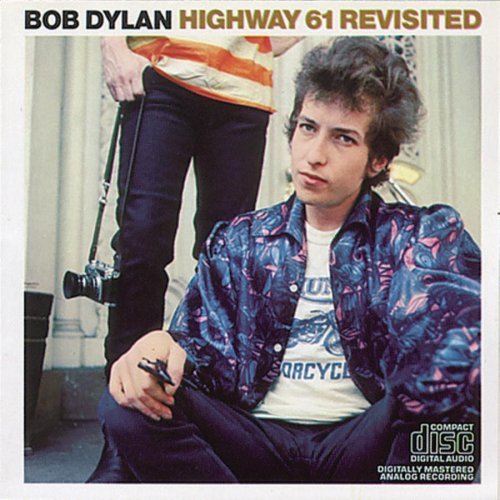
Bob Dylan: Highway 61 Revisited This reached #3 and changed rock history. With its lead track, “Like a Rolling Stone,” Dylan even neared the top of the singles chart himself; the song changed rock forever and made Dylan a mainstream figure. At over six minutes, it was twice the length of most pop singles, but so compelling and pivotal that many radio stations played it all anyway. Full-bore rockers (“Tombstone Blues,” “From a Buick 6,” and the title track’s devastating but hilarious critique of modern society), rollicking shuffles of explosive, caustic poetry (“It Takes a Lot to Laugh, It Takes a Train to Cry,” and the searing dissection of the befuddled bourgeousie “Ballad of a Thin Man”), the scruffily beautiful and nearly uncategorizable romantic plaint “Queen Jane Approximately,” the mysterious, evocative “Just Like Tom Thumb’s Blues”; all offer layers upon layers of meaning across a variety of sounds and moods, capped by the closing “Desolation Row,” an acoustic ten-verse epic that takes over 11 minutes to hop around two millennia while mixing historical figures and characters from Shakespeare and the Bible in with Dylan’s.
Johnny Cash: Orange Blossom Special Cash’s career took a surprising turn here with three covers of Dylan songs, most notably “It Ain’t Me, Babe,” which had made it to #4 on the Country singles chart in 1964 -- Dylan’s lyrics could speak to more demographics than expected. It presaged Cash’s turn to a more serious persona, though one that would always feature humor. The more traditional title track made it to #3.
Bob Dylan: Blonde on Blonde A two-LP set when that was unheard of in rock, which shows how prolific Dylan’s inspiration was in this period, it reached #6 in spite of its greater expense. The amount of variety on it is dazzling, Dylan’s wordplay masterful, the music compelling in its loose exuberance. It opens with the deliberate, humorous chaos of “Rainy Day Women #12 & 35,” another #2 single, but also includes the personal and relatively straightforward “I Want You” (#20), finding Dylan sounding positively randy, and the tenderly perceptive yet unflinchingly detailed “Just Like a Woman” (#33), while a lot of songs suggest that the severe flux of his personal life was providing ample fodder for soong topics. There was room for ruminative epics (“Visions of Johanna” and the 11-minute relationship memoir “Sad Eyed Lady of the Lowlands”), poetic and playful wordplay (“Stuck Inside of Mobile with the Memphis Blues Again”), sharp-tongued blues (“Leopard-Skin Pill-Box Hat”), absurdist blues (“Obviously Believers”), the circusy “Most Likely You Go Your Way and I’ll Go Mine,” and much more on a 14-song album. Kooper returns to anchor the sound on organ, while Hawks lead guitarist Jaime (AKA Robbie) Robertson slips into the Mike Bloomfield role with some burning solos, and Nashville sessionmen have the time of their lives rocking with a country roll that makes it all fun to listen to.
Simon & Garfunkel: Sounds of Silence; Parsley, Sage, Rosemary and Thyme Tom Wilson (the same Columbia producer who shaped Dylan’s “Like a Rolling Stone”) took a promising song from Simon & Garfunkel’s unsuccessful debut, the folkie Wednesday Morning, 3 AM, added electric backing under the duo’s vocals and acoustic guitar while they weren’t around, and got a hit single from it that became the title track of their next album, Sounds of Silence, released in January. It hit #1 on the LP chart. Simon had been in England, where he had absorbed many influences, notably Jackson C. Frank (it’s obvious on Simon’s “Kathy’s Song”; Simon returned the favor by producing Frank’s debut LP) and Davy Graham (using the opening riff of Graham’s “Anji” for “Somewhere They Can’t Find Me,” then following it with a cover of “Anji” itself). Simon was also more literate (adapting an Edward Arlington Robinson poem for “Richard Cory”) than the average rocker, or folkie for that matter. So, while other folkies going electric drew on the Beatles, Simon had a different deck of cards to deal from. They all drew on Dylan, of course (Bob Johnston took over the LP’s production from Wilson, just as he had on Highway 61 Revisited); the organ on “I Am a Rock” is extremely reminiscent of Al Kooper’s contribution to “Like a Rolling Stone.” In October, S&G hit again with what I always think of as the herb album. Their success had earned them total control, and they became a bit less folk-rock, more art-folk-pop, as shown immediately by the harpsichord on "Scarborough Fair/Canticle" (the title track, sort of) and the way two songs are meshed in Ivesian fashion. There’s still Dylanesque organ and even wordplay (“The Big Bright Green Pleasure Machine,” “A Simple Desultory Philippic”), still British influence (“The 59th Street Bridge Song (Feelin’ Groovy)” is rather like skiffle with sophisticated production), and Simon once again wears his literary interests on his sleeve (“The Dangling Conversation”). Things occasionally teeter on the edge of pretension, but sheer beauty saves them.
For this case study I am going to be focusing on a musician who frequently reinvented his music and image. He is known for his distinctive voice and the intellectual depth of his work.
David Robert Hayward-Jones (8th January 1947, is an English musician, actor, record producer and arranger. He has been active in five decades of music. Bowie is widely regarded as an innovator mostly for his work in the '70s.
The Beginning David Bowie first caught the eye of the general public in the autumn of '69, with the song Space Oddity.
- This early version of the video was part of Bowie's promotional film, Love You Till Tuesday. - Oddity is about the launch of Major Tom, a fictional astronaunt. - The BBC features the song in its television coverage of the lunar landing. - It reached the top five of the UK singles chart.
Bowie split from record label Dream, his manager Kenneth Pitt negotiated a one-album deal with Mercury Records and Philips in 1969. A potiental producer George Martin turned the project down Bowie stumbled across Tony Visconti who liked the album demo-tracks, but considered Oddity as a gimmick track. The production was then handed over to Gus Dudgeon.
Bowie first sparked an interest in music at the mere age of 9, listening to his father's records. During the early 1960's Bowie was performing under his own name or the stage name "Davie Jones". This created confusion with Davy Jones of The Monkees. He then chose "Bowie" for his stage name, and released his first album in 1967 for the Decca Records, David Bowie spanning the genres pop, psychdelia and music hall. He was influenced by the dramatic arts and studied from avant-garde theatre and mime to Commedia dell'arte. His work involves the creation of characters and personae to present to the world alongside music. Bowie sold his first song in '67 to another artist Oscar (very early stage name of actor/musician Paul Nicholas).
- - - - - - - - - - - - - -
70's
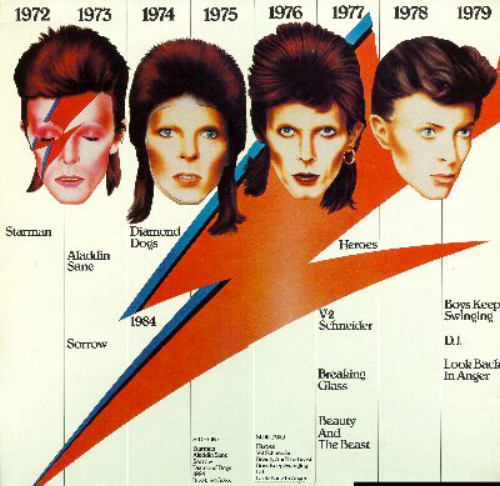
- Bowie released his third album, The Man Who Sold The World in 1970. Collaborating with Mick Ronson for the first of many times. The cover shows Bowie in a dress, this is a very early example of his androgynous appearance. - His next album Hunky Dory 1971 (one of his best albums in my opinion) explores more serious themes on tracks such as the semi-autobiographical The Bewlay Brothers and the Buddhist-influenced Quicksand. He paid direct homage to his influences with Song for Bob Dylan, and Andy Warhol. The album was not a big hit but it laid groundwork for the move that lifted Bowie into the first rank of stars. - He then further explored his persona in June 1972with concept album The Rise and Fall of Ziggy Stardust and the Spiders from Mars which present a world destined to end in five years and it tells the story of rock star, Ziggy Stardust. Some of what are considered to be Bowie's classics stem from this album such as: Ziggy Stardust and Suffragette City.
- Bowie began promoting and producing with several of his heroes and influences. He has worked with the likes of Lou Reed and Iggy Pop. Thanks to Bowie Iggy's band The Stooges signed with Bowie's management (MainMan Productions).
- In 1973 the Spiders From Mars came together again on Aladdin Sane. The album includes the UK #2 hit The Jean Genie and the #3 hit Drive-In Saturday.
- 1974 saw the release of another ambitious album, Diamond Dogs.
- Bowie achieved his first major American crossover success in 1975 with the number-one single Fame. Co-written with John Lennon, the song stems from the hit album Young Americans. The sound constituted a radical shift in style that initially caught the attention of Bowie's UK devotees. Lennon's voice can be heard at the end repeating the word FAME.
- Station to Station 1976 featured a darker version of this soul persona called "The Thin White Duke". Visually it was an extention of Thomas Jerome Newton (the character he played in The Man Who Fell to Earth)
- - - - - - - 80's
- Scary Monsters (and Super Creeps), included the hit single Ashes to Ashes. The imagery used in the video gave international exposure to the underground New Romantic movement. - 1981 Under Pressure, co-written and performed with Queen was released. - In 1983 Bowie scored his first commerical blockbuster with Let's Dance. The album features hits: Modern Love and China Girl. - 1984's album Tonight also dance-oriented, featured collobarations with the likes of Tina Turner and Iggy Pop. It also included various covers including one of The Beach Boys song, God Only Knows.
- Bowie's final solo album of the 80's was 1987's Never Let Me Down. He ditched the light sound of his two earlier albums and offered a techno dance edge to his music. The album contained hit singles Day In, Day Out, Time Will Crawl and Never Let Me Down. Bowie then described it as "my nadir" and "an awful album".
- For the first time since the early 1970s, in 1989 Bowie formed a regular band, Tin Machine. Tin Machine released two studio albums and a live record. The band recieved mixed reviews and a reception from the public. The original album Tin Machine was a success holding the number three spot on the charts of the U.K.
- After the less successful second album Tin Machine II and the complete failure oft he live album Tin Machine Live he disbanded Tin Machine to work on his own.
- In 1993 Bowie explored once again new directions with The Buddha of Suburbia, based on incidental music composed for a TV series. It contained some elements explored in the album before, Black Tie, White Noise.
- In 1995 he released an album Outside, another collaboration with Brian Eno. - In 1997, Bowie received some of the strongest critical response since Let's Dance with Earthling.
- In 1999 Hours was released featured new versions of some of his earliest pieces as well as three new songs.
- Then in 2002 Bowie collaborated with Visconti on the album Heathen.
- In 2003 Bowie released an album Reality and announced a world tour.
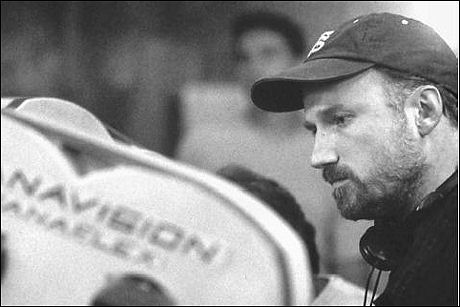
David Fincher is an American film/music video director. Known for his dark movies such as: Se7en and Fight Club.
How Fincher made it
- Son of Jack Fincher (a chief and writer for Life magazine. - Began making movies at 8 with a 8mm camera. - Started off by getting a job loading cameras for John Korty (Korty Films). - Was then hired by Industrial Light & Magic in 1980, where he worked on productions such as Indiana Jones and the Temple of Doom and Return of the Jedi. - Left in '84 to direct a commercial for the American Cancer Society. - Producers in LA spotted him and was given the chance to direct the documentary The Beat of the Live Drum, in 1985. - Work with companies like Revlon, Converse, Nike, Pepsi, Sony and Levi's. - Fincher soon discovered music videos and went on to direct many promos. - Joined video-production company, Propaganda Films and started off directing music videos and commercials.
Some of his most famous work..
Vogue - Madonna
Shot at The Burbank Studios in California on February -10 1990. Filmed in black-and-white, the video pays visual reference to the look of the 1930s Hollywood films with the use of artwork by Tamara de Lempicka (Art Deco). Many of the scenes were recreations of photographs taken by the noted photographer Horst P. Horst, including his famous "Mainbocher Corset" (right). Some of the close-up poses pay homage to stars like: Marilyn Monroe, Veronica Lake and Marlene Diethrich. There was some controversy surrounding the video (as Madonna loves abit of controversy) due to a scene where Madonna's breasts could be seen through her blouse. This video was the third time Fincher and Madonna collaborated. Their first colaboration was in 1989 with "Express Yourself"
and their second collaboration was again in the same year with "Oh Father".

 d it. I had always listened to my father's music and for the first time in my life I felt like I had my own sense of individuality as everyone thought I was crazy for liking them! It sounds really cheesy, but this is the reason I still listen to them.
 are an amazing band, in 2002, they independently released a limited edition CD entitled Nothing and Nowhere. In July, 2
 004, they released a nin song EP entitled Violet and at the end of the year, re-released Nothing and Nowhere with new sleeve artwork. In the fall of 2004, the band was signed to Repo Records in Germany, and released a remastered version of Violet in Europe.